 Info@HPYSorting.com

This case study addresses the challenge of pre-concentrating lead-zinc ore in Kazakhstan with complex mineralogy, fine dissemination, and elevated contents of carbon-bearing minerals and silica. These characteristics make the material difficult to beneficiate using conventional methods.
The purpose of this study was to compare the pre-concentration performance of a conventional XRT sorter with HPY's latest Photon Series sorter. The evaluation followed a staged testing program, including laboratory analysis and pilot-scale trials with a conventional XRT sorter in March 2024, followed by pilot-scale trials with a Photon Series sorter in October 2025.
The results show that Photon-Counting Detection (PCD) technology can deliver stable, industrially relevant sorting performance on this type of ore, while the conventional XRT approach could not meet the required separation targets.
I. Project Background
This case focuses on a sediment-hosted lead-zinc deposit in Kazakhstan. The ore contains finely disseminated sulfides—primarily sphalerite and galena—present as very fine inclusions ranging from 0.5 to 20 µm within carbonaceous siliceous dolomites.
These sulfides are closely associated with gangue minerals such as quartz and carbonates, which contribute to the refractory nature of the ore.
The project also faces major operating challenges, including substantial slime generation, with the +0–10 mm fraction reaching 50–55% after blasting, as well as extreme winter temperatures as low as –28.6°C, requiring robust cold-resistant equipment design.
Taken together, fine mineral dissemination, complex mineral associations, excessive slime generation, and harsh climate conditions greatly reduce the effectiveness of conventional beneficiation methods such as gravity separation, flotation, and standard XRT sorting.
II. Comparison of Sensor-Based Ore Sorting Performance
1. Pilot-Scale Testing with a Conventional XRT Sorter (March 2024)
Tomographic analysis showed poor differentiation between ore with different component grades, with significant overlap in the scatter plot data. This indicated that conventional XRT was not suitable for sorting this material.
Under optimized conditions, with a rejection rate of 20.33%, the combined Pb+Zn content in the waste rock was 1.43%. When the rejection rate increased to 32.17%, the Pb+Zn content rose to 2.24%, far above the project target of 0.35%.
Recovery to concentrate ranged from 83.6% to 92.7%. This limited beneficiation efficiency was attributed to insufficient atomic-number contrast between valuable minerals and gangue, as well as the fine dissemination of sulfides, which prevented conventional XRT systems from generating a clear detection signal.
2. Pilot-Scale Testing with an HPY Photon Series Sorter (October 2025)
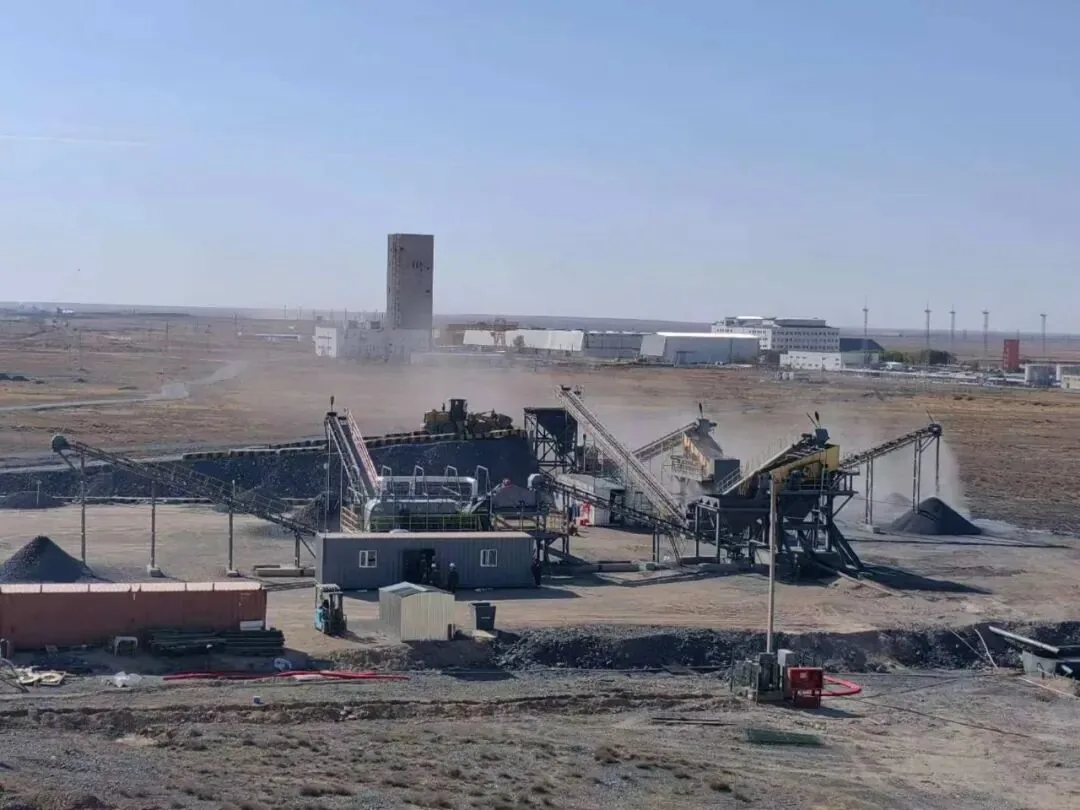
During the pilot-scale trials, the Photon Series sorter achieved the target indicators: a rejection rate of 29.6%, metal recovery of 97%, a waste-rock grade of 0.32% Pb+Zn, and throughput of 30-40 t/h.
To better simulate real-world operating conditions, including mining methods and site-specific factors, specific ore-to-waste ratios were applied. These reflected expected dilution and losses, with waste-rock proportions ranging from 25% to 33%. Under these conditions, waste-rock grades were reduced to 0.24-0.29% Pb+Zn.
Stable long-term operation was confirmed for the +10–40 mm size fraction at a throughput of 35 t/h. The trials also identified an optimal waste-rock content in the feed of 25–35%, consistent with dilution and loss levels typical of room-and-pillar and sublevel stoping methods.
These results show that the optimized Photon sorting approach can significantly improve both the technical and economic performance of the operation by increasing resource utilization and reducing production losses.
III. Key Differences and Advantages of Photon-Counting Detection Technology
The key difference between the HPY Photon Series sorter and conventional XRT sorter lies in a technological shift across three levels: sensor capability, algorithm design, and operational engineering—which enables industrially relevant performance on ore previously considered unsortable.
1. Multimodal Sensor Analysis
Conventional XRT sorting often struggles with ores in which valuable minerals are finely disseminated and closely associated with gangue. Because it relies mainly on single-projection X-ray imaging, the system reads a particle largely as an averaged signal. In this type of ore, that averaged response can mask small but important mineral differences, making it difficult to reliably distinguish low-grade ore from waste rock.
HPY's Photon-Counting Detection technology addresses this limitation by integrating data from multiple sensor channels, including X-ray tomography. Instead of depending on a single averaged view, the system captures more detailed information from different dimensions of the particle, allowing it to recognize subtle and localized mineral characteristics even when target minerals are only exposed in small areas or finely distributed within the host rock.
This multimodal sensing approach significantly improves the system's ability to detect valuable material in complex ores, making stable and industrially relevant sorting possible for material that conventional XRT systems would struggle to treat effectively.
2. Deep Learning-Based Algorithmic Framework
A key part of the system is its use of deep neural network architectures for high-accuracy material classification. Within 20 milliseconds, the system extracts a broad set of features, including color, texture, mineral inclusions, and morphology, to support more precise sorting decisions than conventional visual analysis alone.
The system also incorporates an adaptive incremental learning mechanism, allowing the model to continuously improve classification accuracy as more data is collected. During testing, early minor deviations in Zn content in the waste rock were addressed through model retraining, resulting in stable performance.
3. Engineering Design and Operational Reliability
The equipment is specifically engineered for low-temperature operation, with cold-resistant systems for compressors, pipelines, and electrical components.
The processing line includes complete material preparation and sorting workflow. A high degree of factory pre-assembly supported rapid deployment: installation began on September 16, 2025, and industrial trials were completed by October 17, 2025.
IV. HPY: A Pioneer in the Application of AI for Ore Processing
This new Photon-Counting Detection technology was developed by HPY Technology Co., Ltd., a specialized company focused on intelligent sensor-based sorting technologies, including XRT, PCD, and laser-induced emission systems.
HPY equipment is used for the pre-concentration of a wide range of ores, including tungsten (W), tin (Sn), lead (Pb), zinc (Zn), copper (Cu), gold (Au), silver (Ag), manganese (Mn), and barite.
HPY operates a comprehensive laboratory capable of supporting the full testing cycle and has project delivery experience across diverse climatic regions, including Central Asia, Southeast Asia, and Africa.
V. Conclusions and Outlook
Industrial-scale trials conducted at a lead-zinc deposit in Kazakhstan support the following conclusions:
- Conventional XRT technology could not effectively separate this refractory ore, which is characterized by fine dissemination, high carbon content, and high silica content, because the contrast in atomic number and density between valuable minerals and gangue was insufficient.
- HPY's PCD technology, based on multimodal sensor analysis and deep learning-driven classification, delivered industrially relevant performance on this type of ore, with a waste-rock grade of 0.32% Pb+Zn, metal recovery of 97%, and waste rejection of 29.58%.
- The economic value of the technology is reflected in a 30% reduction in material sent to grinding and flotation, together with a 1.38× increase in feed grade, helping lower operating costs and improve processing efficiency.
- Preliminary results from stockpiled material also indicate strong potential for reprocessing technogenic deposits and recovering residual valuable components.
Overall, the results demonstrate the strong potential of the HPY Photon-Counting Detection technology for the industrial treatment of complex ore types and for the design of processing flowsheets for similar mineral resources.