 Info@HPYSorting.com

Mineral Processing Plant Sorting
This is the most common deployment point. HPY XRT and VIS-HD sorting increase feed grade, reduce manual workload, and reduce tailings pressure by removing waste earlier.
Ore sorting is a physical pre-concentration process that identifies each particle using sensor signals and separates valuable ore from waste rock before downstream processing.
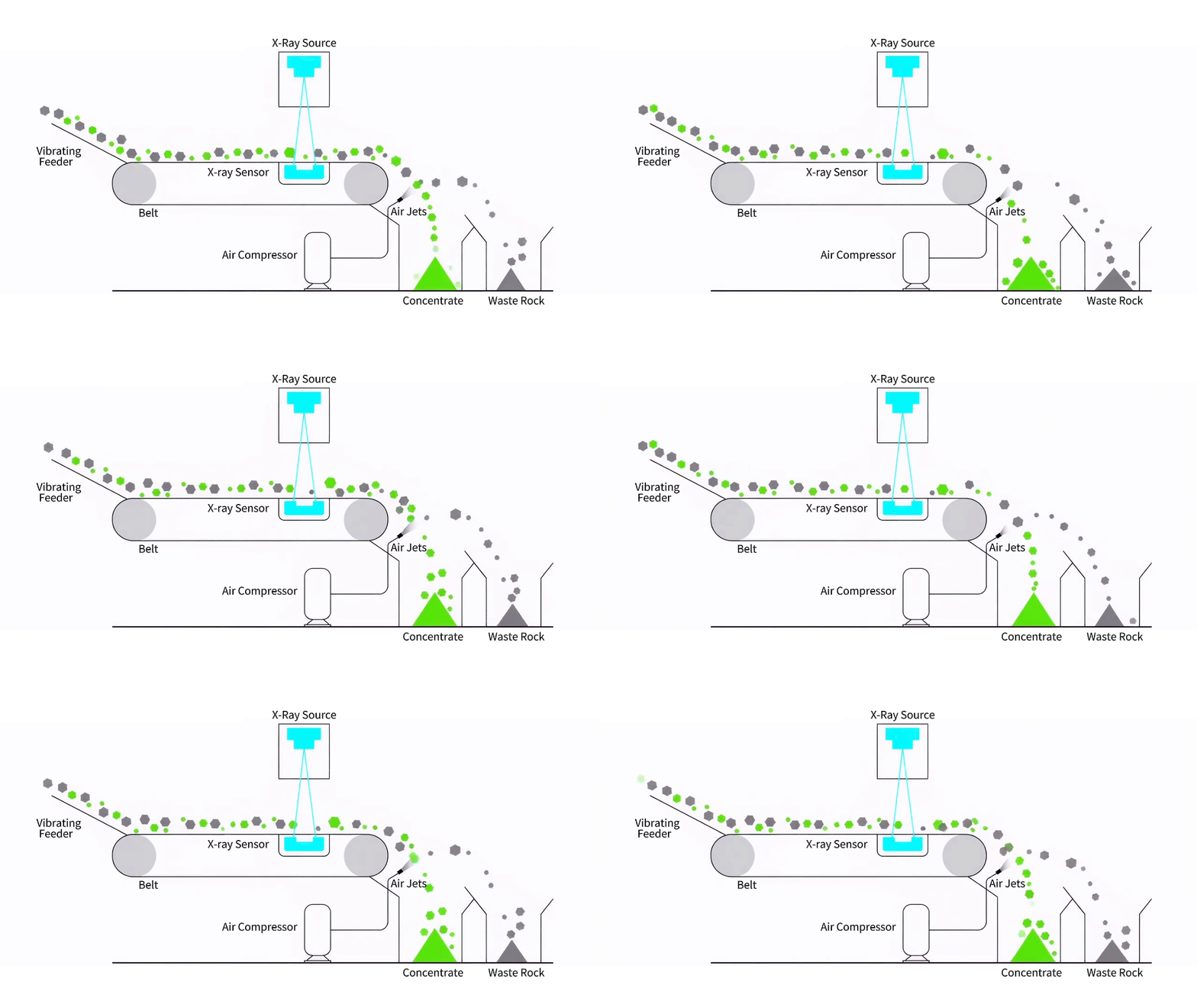
Sensor-based sorting has been used in mining since the 1970s. Recent advances in machine vision, AI, deep learning, and image recognition now make it faster and more precise. Modern XRT systems can recover value from low-grade ore and historical stockpiles, improving both resource utilization and project economics.
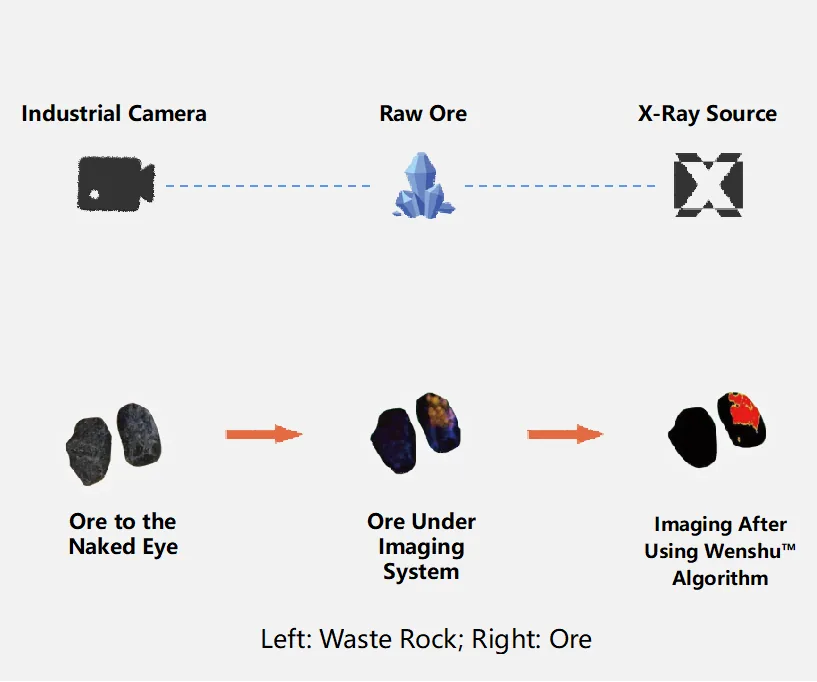
HPY combines dual-sided VIS-HD imaging, X-ray sensing, and self-optimizing algorithms to keep separation performance stable across changing ore conditions.
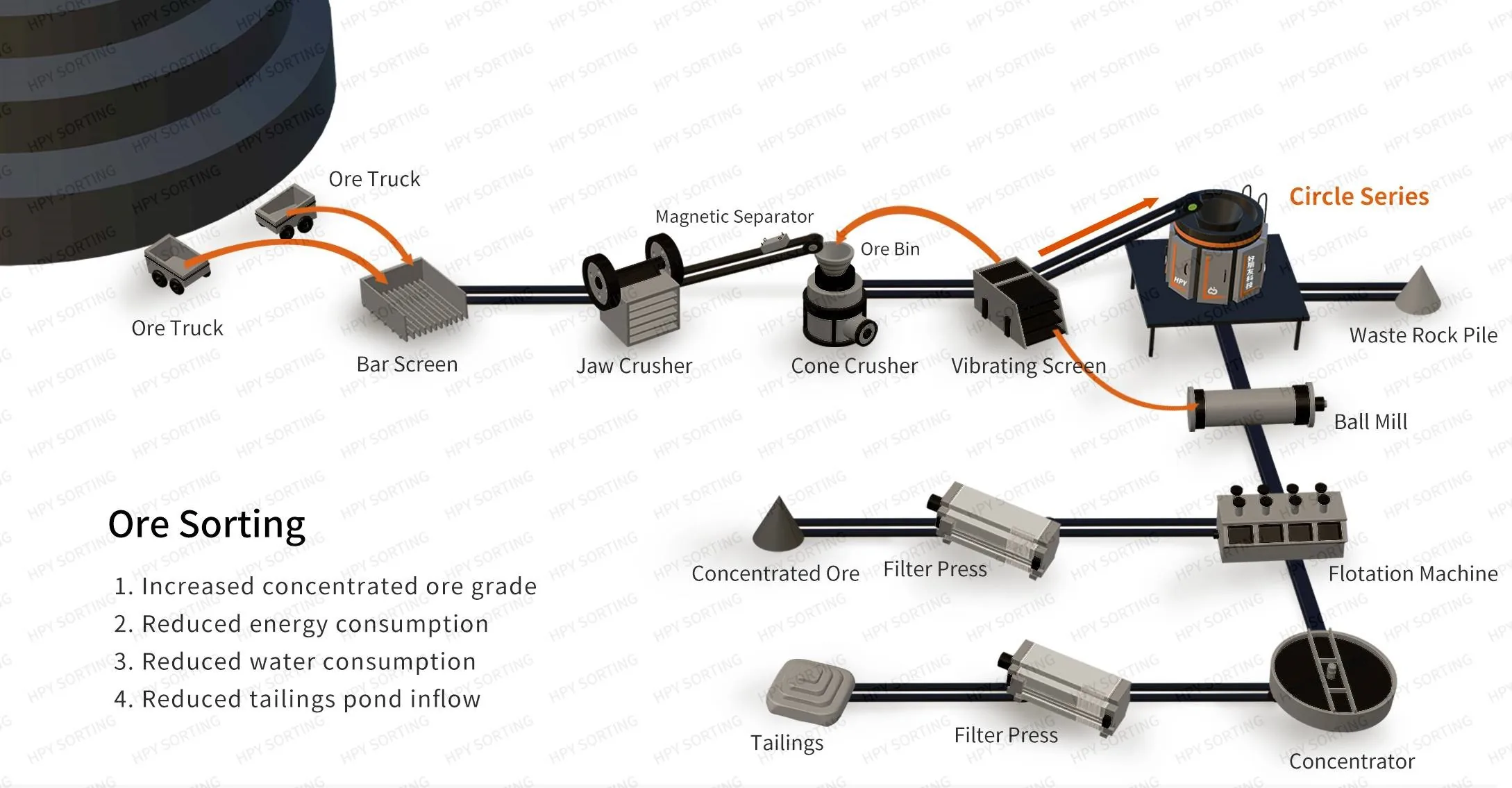
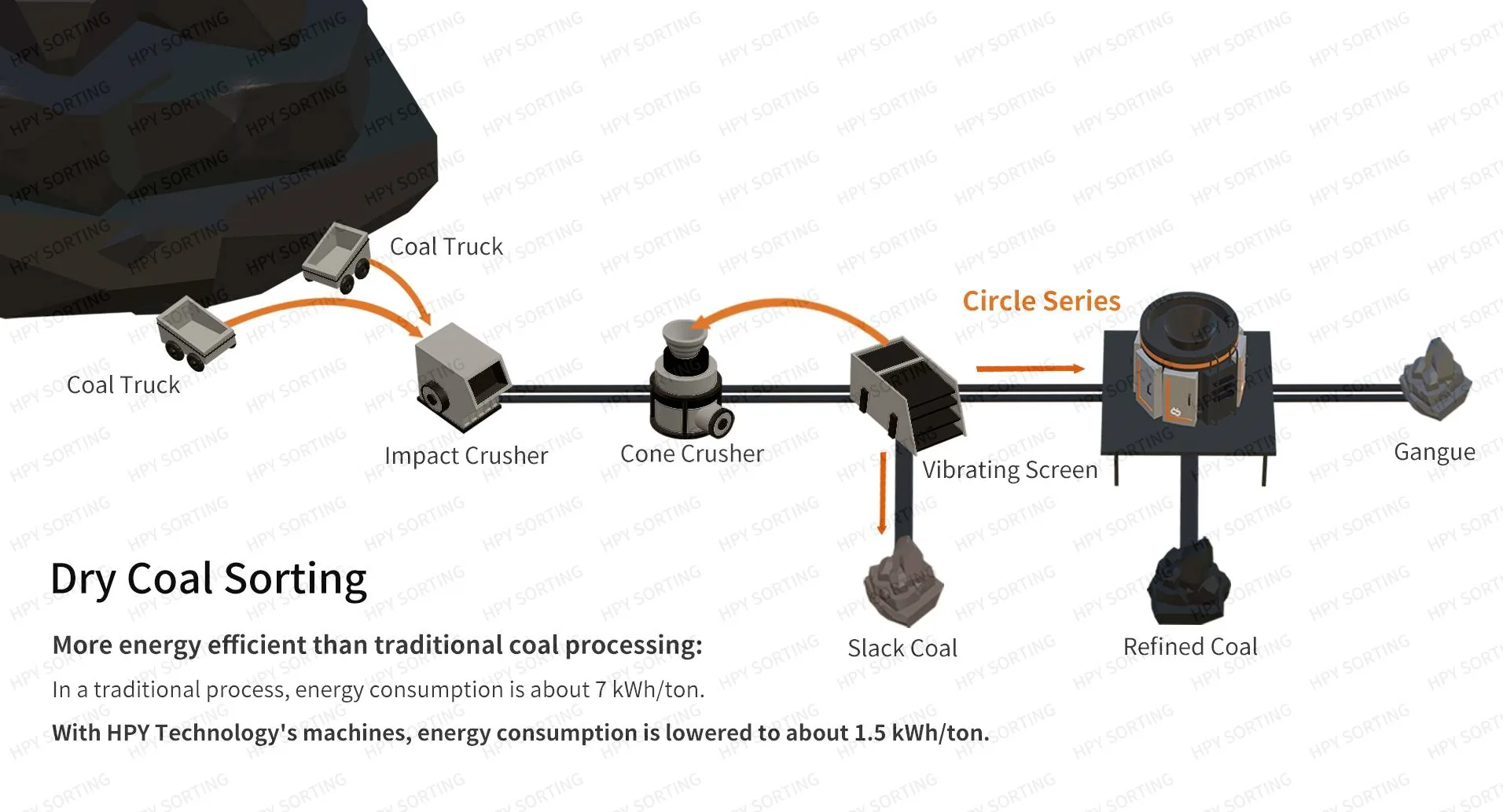
HPY customizes sensing combinations for different ore bodies and applies its Wenshu AI model to continuously adapt to grade and texture variation. This enables accurate identification across particle size, luster, thickness, and surface conditions, helping plants maintain recovery and reject rates with less manual intervention.
Since its inception, HPY has focused on making ore sorting practical across different mining stages so operations can recover more value while reducing energy and handling costs.
This is the most common deployment point. HPY XRT and VIS-HD sorting increase feed grade, reduce manual workload, and reduce tailings pressure by removing waste earlier.
HPY helps transform waste rock piles and low-grade stockpiles into recoverable resources, opening additional revenue streams and lowering environmental risk.
Upgrade run-of-mine grade on-site before hoisting.
Expand reserves by unlocking low-grade zones.
Cut hoisting cost by reducing waste transport.
Reuse sorted waste as backfill to improve stability.
Deploying sorting at the pithead maximizes transport value, especially for mines with long haulage distance to processing plants, while reducing unnecessary downstream load.
HPY systems are designed to improve profitability while reducing resource intensity across the mineral processing chain.

Average economic savings of 3.13 million USD per unit.

Improved sorting quality with reduced sorting costs.

Mineral recovery rates of up to 98%.

Waste rejection rates of up to 90%.

Low operation and maintenance cost below 0.2 USD per ton.

Reduced water consumption.

Lower grinding and flotation energy demand.

Reduced tailings pressure and extended pond service life.

Improved extraction, resource utilization, and recovery.

Reduced use of harmful chemicals in traditional sorting.