 Info@HPYSorting.com

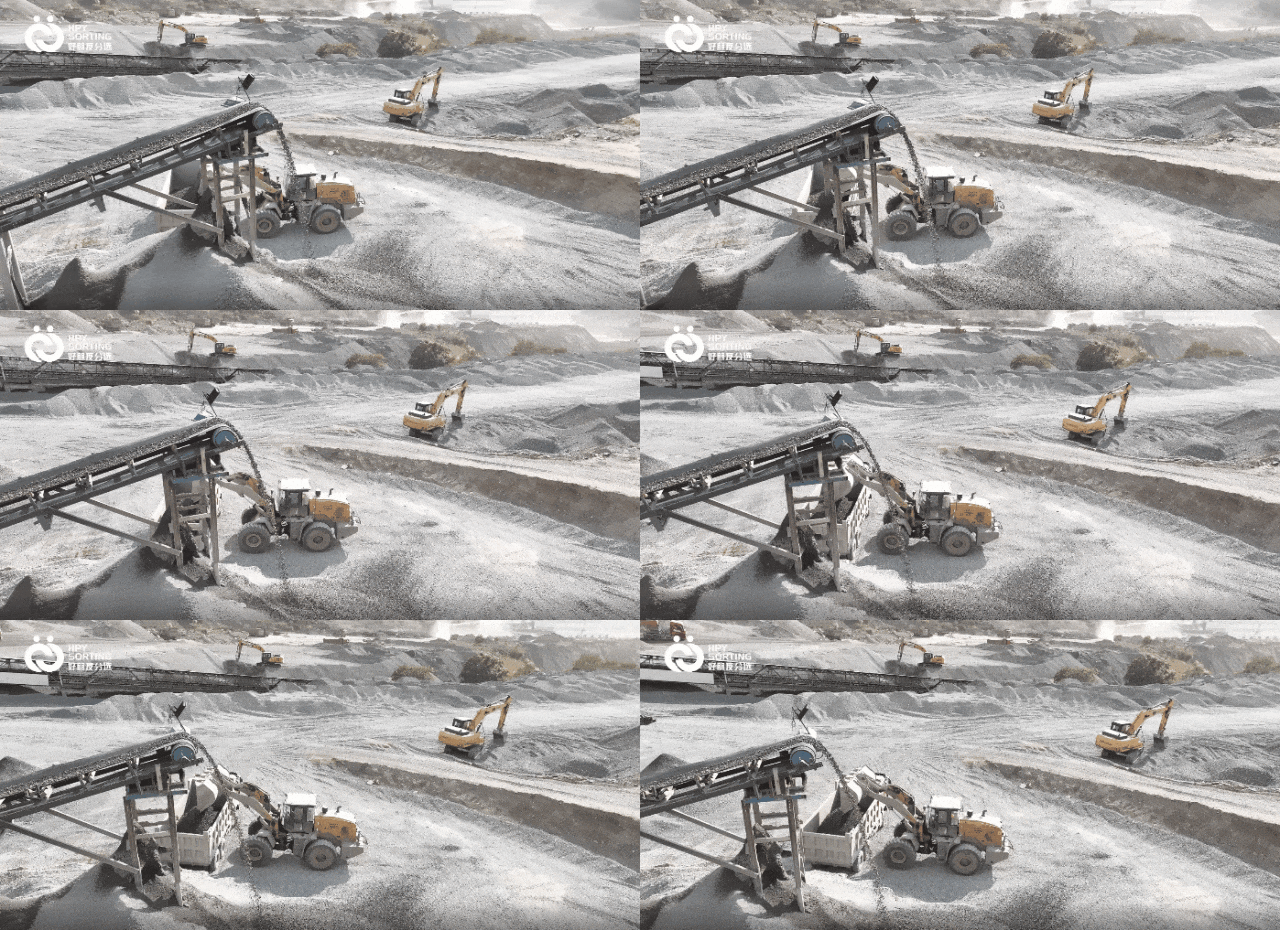
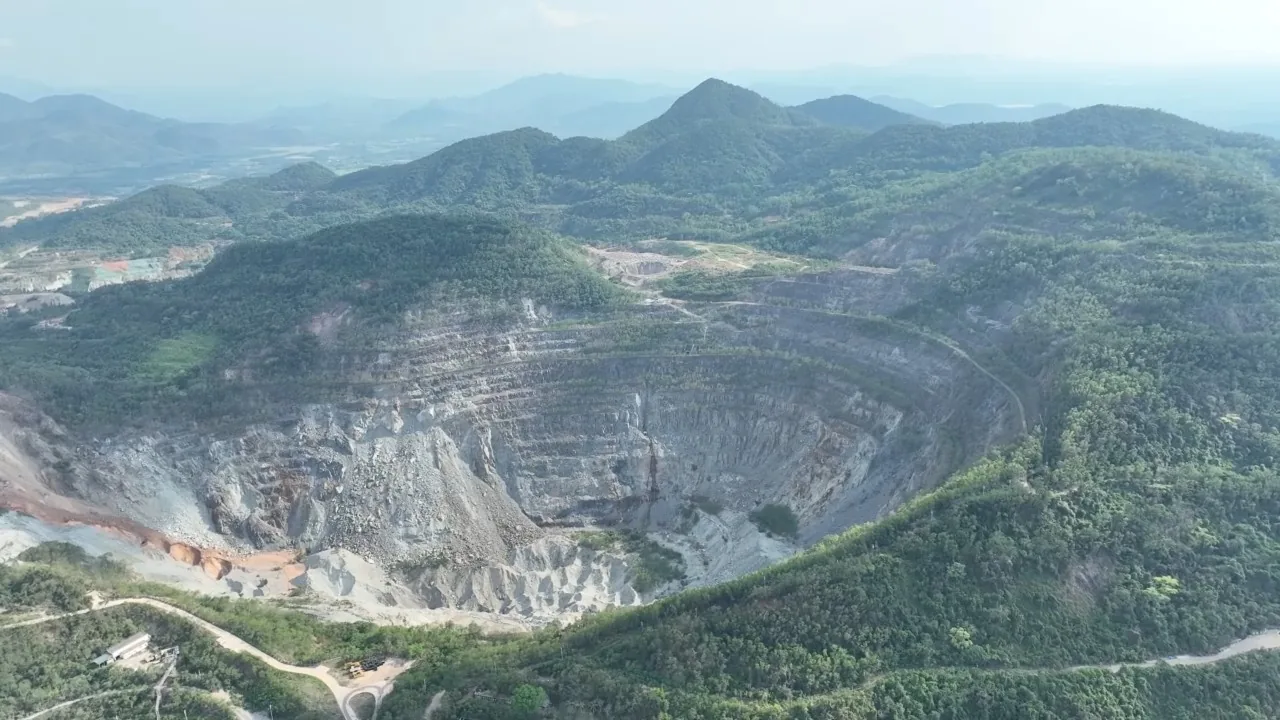
After nearly 90 years of mining, the Hainan Iron Mine in China had accumulated more than 200 million tonnes of waste rock across over 200 hectares. Although this material still contained 10~30% Fe, recovering that value had long been considered uneconomic using conventional processing methods. At the same time, the continued growth of historical waste rock stockpiles created long-term pressure in terms of land occupation, environmental management and resource loss.
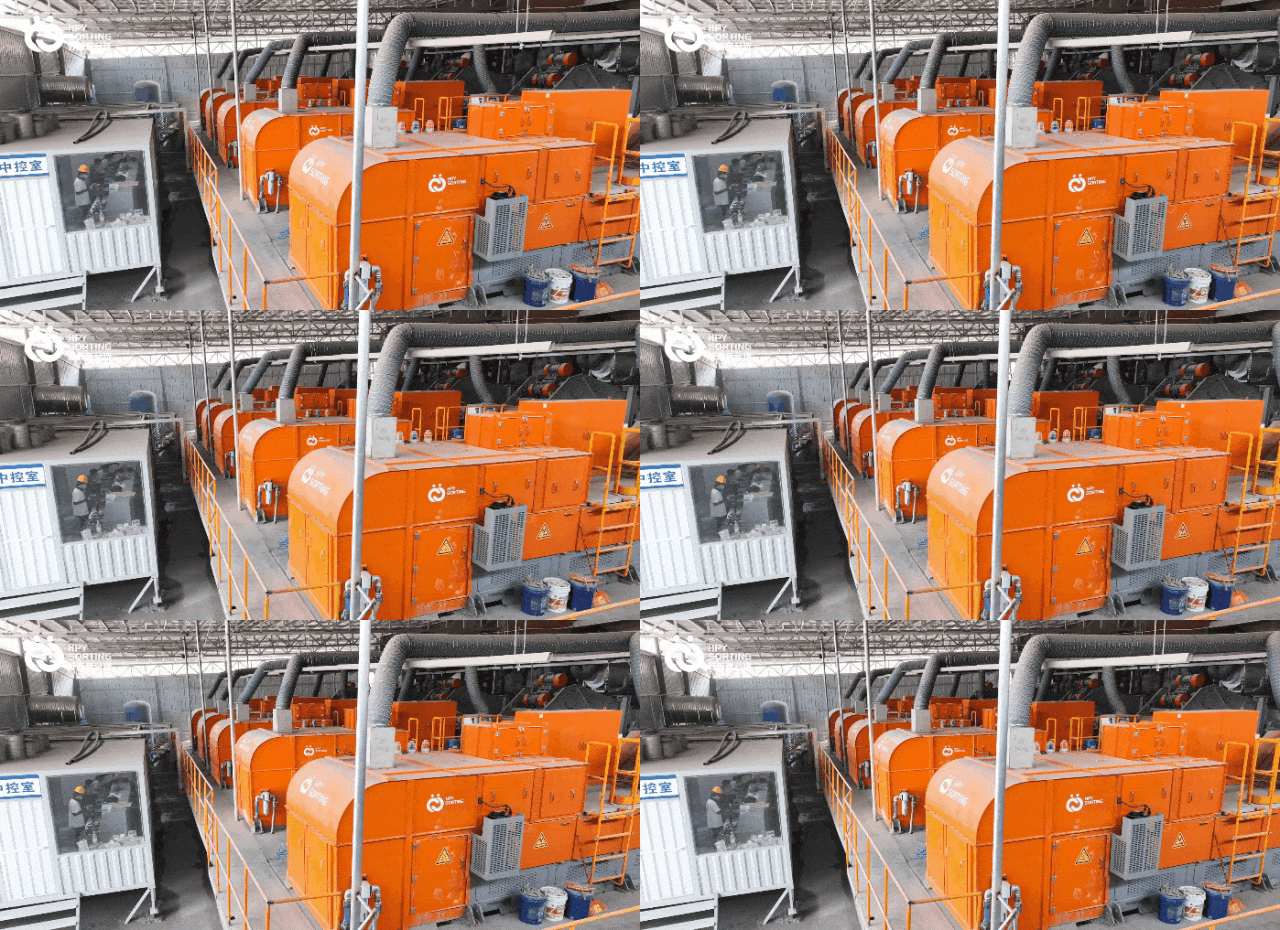
To address this challenge, the project introduced HPY's sensor-based ore sorting technology to reprocess the 10~40 mm size fraction of the waste rock. The system combines XRT dual-energy detection with HPY's Wenshu AI algorithm to identify hematite-bearing particles based on density, texture and particle size, enabling real-time separation by air jets.
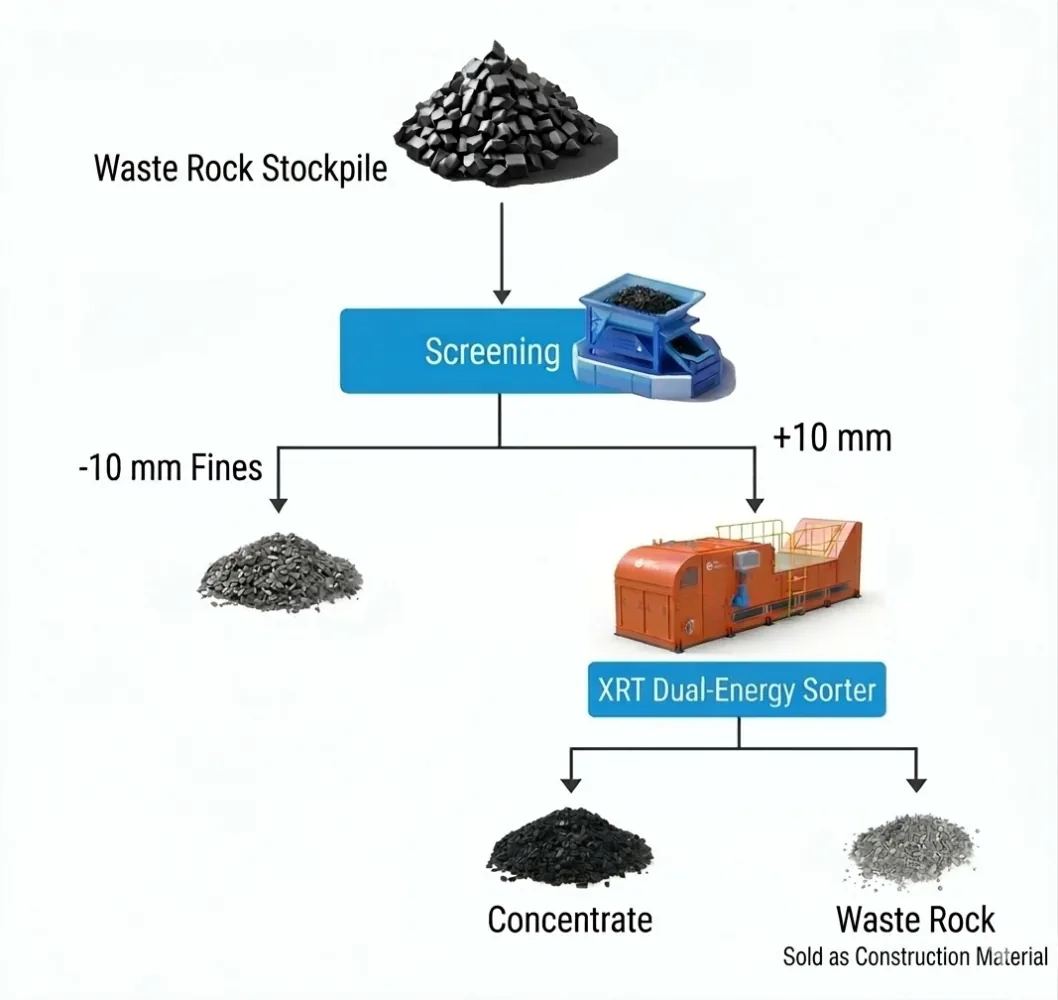
The process flowsheet is simple and efficient. After screening, the 10~40 mm fraction can be directly fed into the sorting system without grinding, water or chemical reagents. At design level, the project is capable of processing approximately 1 million tonnes per year of this size fraction, with sorting throughput of 30~40 tph. The designed product is a pre-concentrate grading at least 38% Fe, while the rejected waste rock can be sold as construction material. Compared with traditional gravity separation processes, the project is also designed to reduce water consumption by 90% and electricity use by 40%.
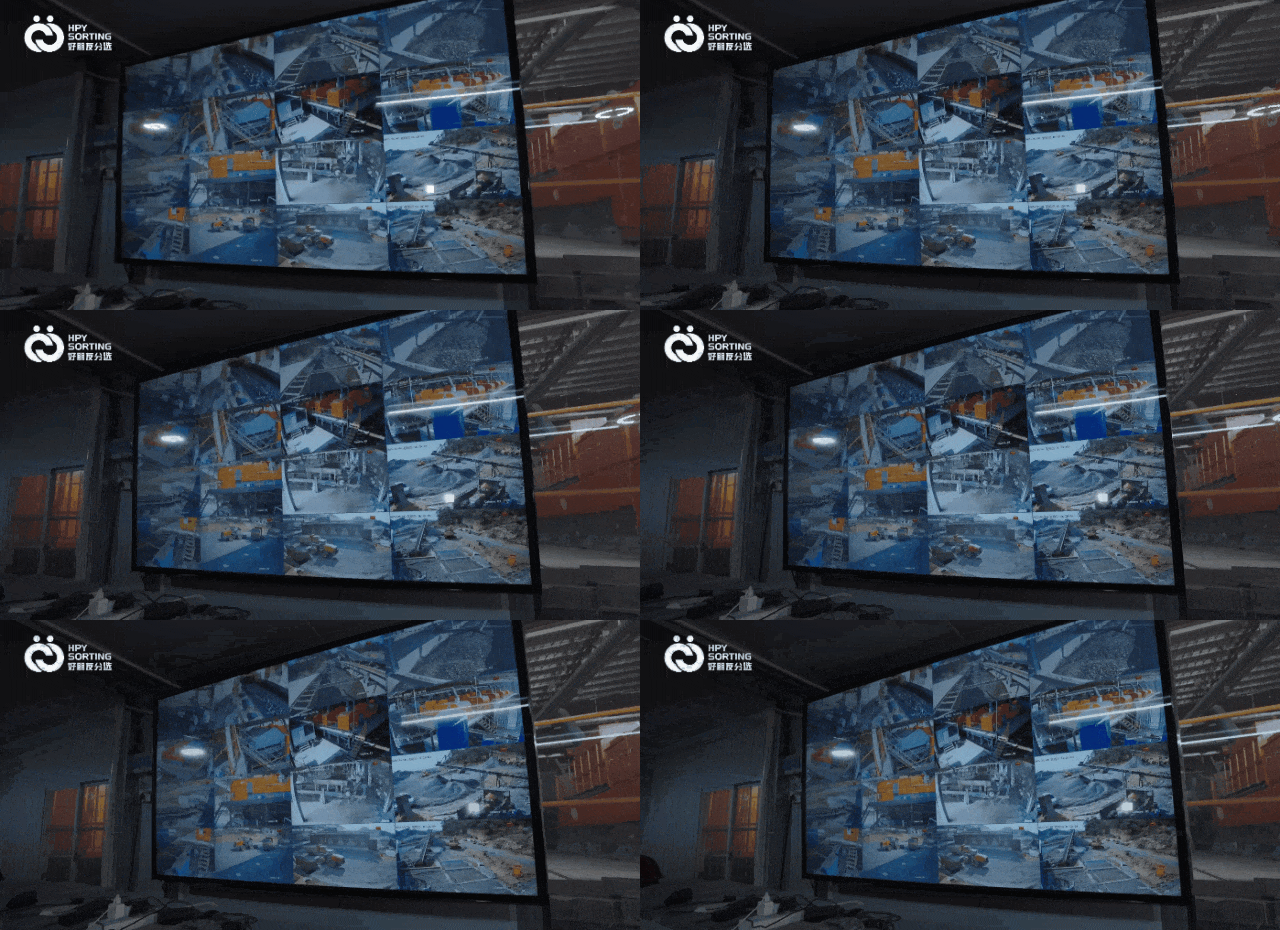
The HPY sensor-based
ore sorting system entered production in late March 2025. Nearly one year later,
the operation has continued to run reliably, averaging more than 17 hours per
day over almost 11 months of production. From mid-April 2025 to mid-March 2026,
the project has achieved the following results:
- Around 850,000 tonnes processed
- Over 100,000 tonnes pre-concentrate produced (≥38% Fe)
- Around 38,000 tonnes of final iron concentrate (>60% Fe) produced after
downstream processing, generating around RMB 5 million in net profit
- Over RMB 10 million in total net profit generated, including profit from
waste rock sold as construction material
In economic terms, the project has generated around RMB 5 million in net profit from iron concentrate production, and more than RMB 10 million in total net profit when including revenue from waste rock sold as construction material.
The Hainan project demonstrates that historical waste rock can be transformed from a long-standing burden into a valuable resource. By combining stable industrial operation with measurable economic returns and lower water and energy consumption, the project provides a practical example of how sensor-based ore sorting can support more efficient and more sustainable mine waste reprocessing.